
A chat can sketch the shop. The plan is still a document.
Shopify Canvas can draft a store by chat. The pages, the price, and who owns the code still have to be written down first.
Kitadev ·
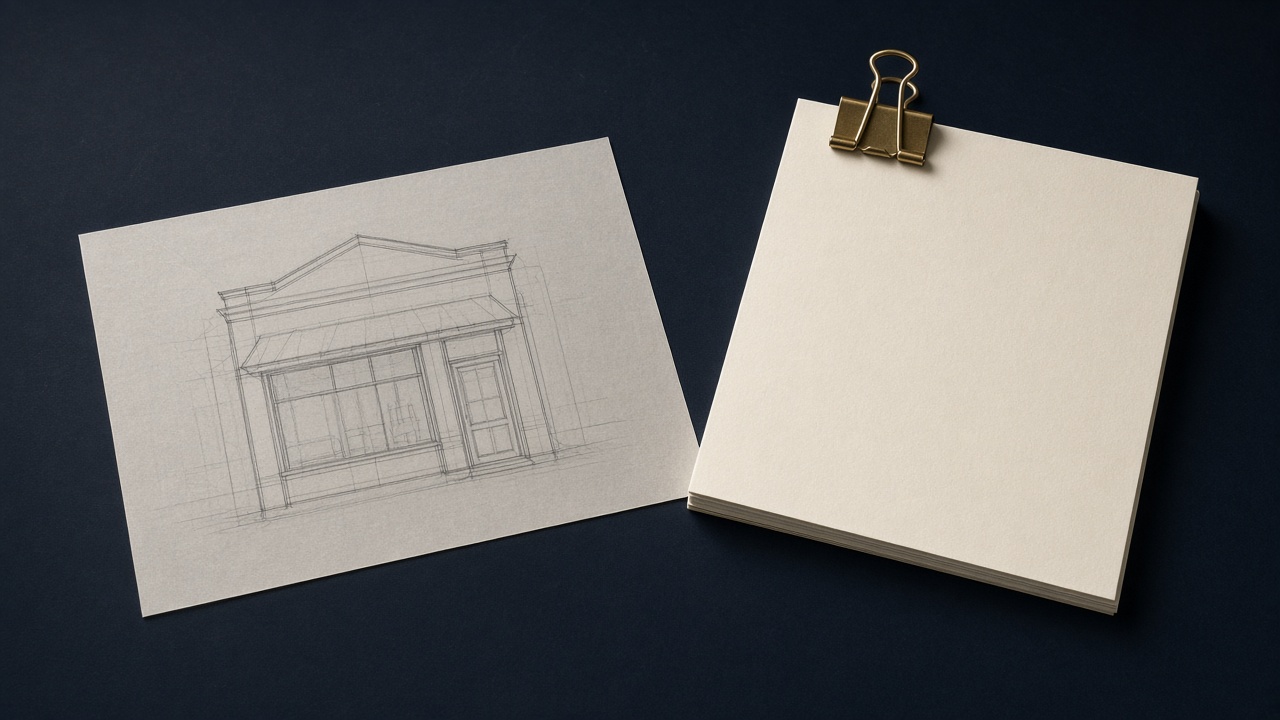
On 1 October 2026 Shopify opened Canvas. Sarah Perez at TechCrunch described it this way: a merchant talks to Shopify's AI, Sidekick, and watches the store change on the screen. You can see the whole shop, or move in on one part.
At launch it runs on a desktop. Shopify told TechCrunch that third-party themes, app blocks, extensions, markets, translations, rollouts, and theme updates are not in this first version. Shopify said those are planned. A planned feature is not a feature you can sell on today. If your shop depends on a third-party theme, an app block, or a second language, Canvas is a preview, not the shop.
Talking a store onto the screen is a fast draft. It leaves the commercial decisions where they were. Which pages exist. What the work costs. Who owns the code when the job ends. A company that sells a service, or that needs its own staff to change the words, still has to settle those three on paper. A picture of a homepage does not answer them. Neither does a chat log.
This is easy to miss because the draft looks finished. Buttons are in the right places. The type is even. A colleague can nod at it in a meeting. The nod is about the picture. The buyer still has to understand what you sell, who it is for, and how to start. If those sentences were never written, the theme cannot invent them, and an AI chat will invent something you then have to stand behind.
Kitadev writes the decisions down before we start. You see the plan, and you agree it, before we build. The plan names the pages, the price, and who owns the code. After handover we fix faults in the agreed work for at least 3 months. New features sit outside that cover. The price is in the plan. It is not listed on this site. Someone can open the finished site on a phone and on a computer. We do not promise a load time for every country. Canvas being desktop-only at launch is Shopify's limit, not a reason for your own site to be desktop-only.
Search still has to be done on purpose. A generated shop can launch with titles that repeat the chat, pages that compete with each other, and no clear page for the one thing you sell. Search work, if you want it, is on the pages you already have: titles and descriptions that match the page, and a path a person can follow. We usually need read access to Search Console, and access to the site. Do not send passwords in the form. We do not promise a rank, and we do not promise that a new theme will be recrawled on a date. We also do not claim Canvas is bad for search. We claim a draft is not a plan.
Website care starts when the shop is live and someone has to keep it that way. Updates, a check when something breaks, a reply during the work week. We can look after a site we did not build, after a first look at the code and the host. The plan names what that care includes, and the price. WhatsApp or email, Monday to Friday, 08:00 to 17:00 Western Indonesia Time. A chat tool that can restyle a page is not the same as a person who answers when the checkout fails on a Tuesday.
Use Canvas, if you use it, for the kind of shop it is built for. Then decide what it did not decide.
If the buyer needs a phone app, that is a mobile plan: what the app does, iPhone or Android or both, and a camera, a location check, or a notification only when the job needs them. No fingerprint reader unless you asked. Store submission only if the plan says so. Apple and Google still decide whether the listing is accepted. A store theme is not that app.
If the work is a desk, a receipt printer, a scanner, or a scale, that is a desktop plan. We do not buy the hardware. Kasir Kita, the ready-made cashier, is a product you can try in the browser. It is not the same document as a desktop app built around your rules, and it is not a Shopify theme.
If the work is a checklist your team already keeps in a spreadsheet, AppSheet can sit on those sheets. Anton Maulana leads that work. He holds Google's advanced AppSheet certificate on Coursera. Data can stay in Google Sheets, Excel, Cloud SQL, or PostgreSQL. Offline capture is in the plan only when the plan says so. Sidekick will not write that scope while it recolours a product grid.
Before you treat a chat draft as a launch, write the three lines on paper: the pages, the price, and who owns the code when the job ends. If you cannot fill them in, the draft is ahead of the decision. That is a useful place to pause.
Tell us what the site must do. We reply by the next business day. You agree the written plan before we start.
Source: TechCrunch, 1 October 2026.